Saving Tangible Media for Tomo1

Today’s guest post is from Natalie Nemes, a 2026 Junior Fellow at the Library of Congress. Natalie recently received her Master’s in Library & Information Science from the University of Wisconsin-Madison. When I tell people that I intern at the Library of Congress reformatting obsolete media such as CDs, DVDs, and floppy disks, their first question […]

Vintage Records Meet Novel Tec1

This year libraries and cultural institutions around the nation are celebrating America’s 250th birthday. The 225-year-old Library of Congress is almost as old as the country itself and this year we’ve joined forces with the Smithsonian Institution to find new stories about America’s founding in our treasure trove of records and artifacts.  The collaboration, called Revolution […]

Full Circle: Library Collabora1

The following post was authored by Vincent Coltellino from the Library of Congress. Vincent leads the Library’s synthetic DNA data storage initiative, which investigates the feasibility of synthetic DNA as a high-density, scalable, and durable medium for storing the Library’s digital collections. During his first year at the Library, he established a contract with the […]

2026 Designing Storage Archite1

The following post was authored by Vincent Coltellino from the Library of Congress.  In 2007, the Library of Congress organized the first Designing Storage Architectures for Digital Collections (DSA) meeting. The purpose of that first meeting was to bring together storage architecture professionals to discuss the unique data storage requirements of the Library’s new National Audio-Visual Conservation Center (NAVCC). In the years since, the event has transformed into a venue for broader discussions of digital storage advancements, […]

Content Authenticity and Prove1

Today’s guest post is from Kate Murray of the Digital Collections Management & Services Division and co-founder of the C2PA for G+LAM Community of Practice. Released in February 2026 as a product of the C2PA for G+LAM Community of Practice, the white paper “Content Authenticity and Provenance in the Age of Artificial Intelligence: A Call-to-Action […]

Using Open Source Tools to Cap1

Today’s guest post is from Morgan Morel of the National Audio-Visual Conservation Center at the Library of Congress. Vrecord is open source video capture software used by video preservation labs across the nation. The idea for vrecord was born from an Association of Moving Image Archivists (AMIA) Hack Day project to see if a Bash […]

From Print Volumes to Digital 1

Since the 1930s, the Handbook of Latin American Studies has documented scholarship on Latin America and the Caribbean. In this interview, Tracy North describes how that long-standing mission now extends to web archiving, ensuring long-term access to web-based research materials. The conversation discusses the collaborative process of selecting websites to archive and the behind-the-scenes work involved in developing the collection.  Please introduce yourself. What […]

File Format Flair for the Holi1

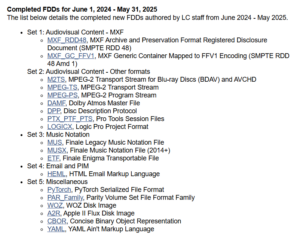
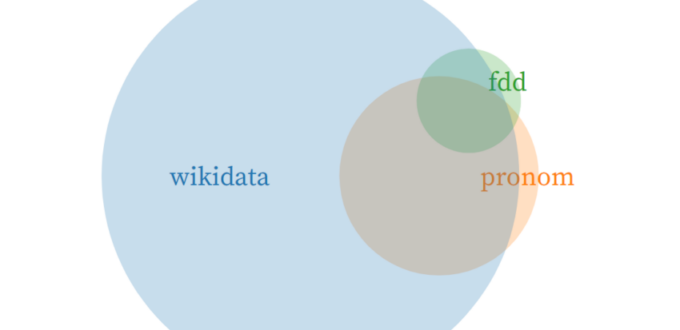
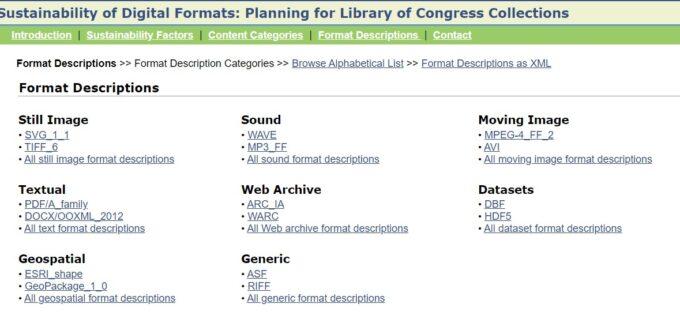
Today’s guest post is from Kate Murray, Liz Caringola, Genevieve Havemeyer-King and Liz Holdzkom of the Digital Collections Management & Services Division at the Library of Congress. Happy new and updated FDDs (format description documents) to all who celebrate! It’s time for one of our favorite holiday traditions – an update about recent file format […]

Bound to Browsable: Unlocking 1

Today’s guest post is from Genevieve Havemeyer-King of the Digital Collections Management & Services Division at the Library of Congress. Even for those who aren’t movie buffs, the vibrant covers of Cine-Mundial never fail to snag one’s attention, and who could deny the pleasure of watching the evolution of the celebrity magazine unfold over 25 years […]

From Communications Studies to1

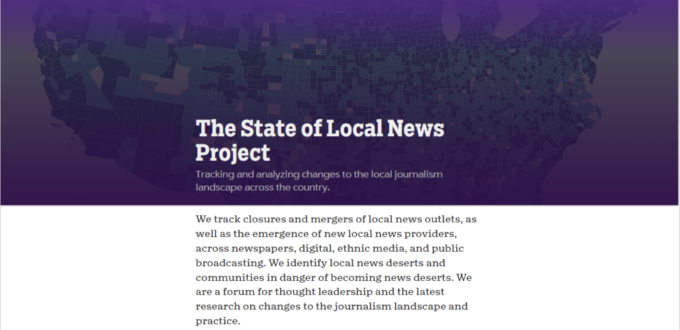
This is a guest post written by Kailyn Slater, a 2025 Junior Fellow in the Web Archiving Section. How can the Library represent the presence of mass communications, as a broad field of theory and practice, on the web? How do we know what is worth preserving? What sources will be impactful for communications workers, […]

Recommended Formats Statement:1

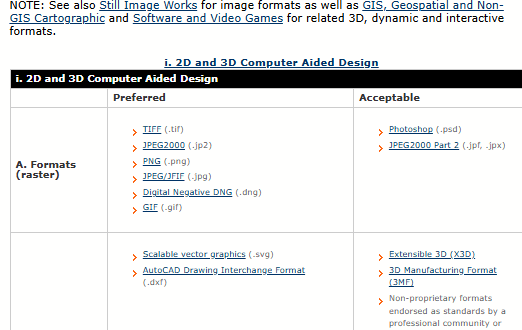
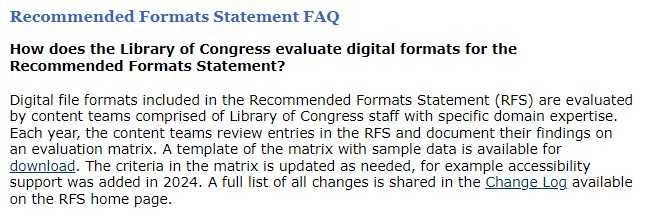
Today’s guest post is from Heather Alvord, Liz Caringola, Liz Holdzkom, Genevieve Havemeyer-King and Kate Murray of the Digital Collections Management & Services Division and Ted Westervelt, Chief, US/Anglo Division at the Library of Congress. The Library of Congress Recommended Formats Statement (RFS) is well into its second decade, having first launched in 2014. It […]

Chronicling the Creation, Dist1

In this interview, Amber Paranick and Kelly Bennett discuss their work on the Mass Communications Archive, a collection that documents how media is created, distributed, and consumed in the digital age. Drawing on their expertise as reference librarians, they explain how they navigated challenges in scope and selected content that complements the Library’s more traditionally […]

New File Format Research and D1

Today’s guest post is from Kate Murray, Liz Caringola, Genevieve Havemeyer-King and Liz Holdzkom of the Digital Collections Management & Services Division at the Library of Congress. This is the eighth installment of our File Format Friends series! You can start at the very beginning with Fun with File Formats from December 2021 and work […]

Archiving an Island Nation: Th1

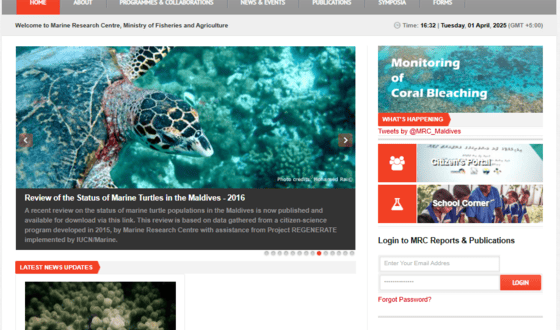
In this interview, Charlotte Giles discusses the Maldives Government Web Archive — how it was created, what it preserves, and why it is an important addition to the Library’s Asian Division. She shares examples of how the archive captures the unique perspective of an island nation and explains why collecting materials from the Maldives is […]

“Can We Capture This?”: An Int

Earlier this year, the Library of Congress and our web harvest vendor MirrorWeb presented research on website archivability at the 2024 Web Archiving Conference at the Bibliothèque Nationale de France in Paris. The presentation was part of a panel called “Can we capture this?’: Assessing Website Archivability Beyond Trial and Error,” which was moderated by Martin Klein (Pacific […]

File Format Research Roundup

Today’s guest post is from Kate Murray, Genevieve Havemeyer-King, Marcus Nappier, Liz Caringola and Liz Holdzkom of the Digital Collections Management & Services Division at the Library of Congress. This year we added two new staff to the Formats team, who have been assisting with format research, FDD updates, and other maintenance activities throughout the year. Welcome […]

Recommended Formats Statement:1

Today’s guest post is from Liz Holdzkom, Marcus Nappier, Genevieve Havemeyer-King and Kate Murray of the Digital Collections Management & Services Division and Ted Westervelt, Chief, US/Anglo Division at the Library of Congress. The Recommended Formats Statement (RFS) is now entering its second decade since it was first launched in 2014. Suffice to say, it […]

It’s a bird, it’s a plane, it’

Before I joined LC Labs, I was an English teacher. In my classroom, the word “derivative” had a negative connotation. To be derivative was to be overly indebted to another idea and thus to lack ingenuity and creativity. When applied to datasets, however, “derivatives” abound. In fact, as you’ll see, derivative datasets sometimes serve a […]

A look at FADGI with Librarian1

Today’s guest post is from Hana Beckerle, a 2021 Librarian-in-Residence at the Library of Congress. I graduated with my MSLIS from Catholic University of America (CUA) in May 2021 and joined the Library’s Digitization Services Section (DSS) as a Librarian-in-Residence in June. While at CUA, I worked as an Electronic Resources Assistant at the University […]